



Safety comes first
The importance of workplace safety is constantly increasing, driven by occupational health and safety authorities. Continuously evolving standards and regulations require that the most up-to-date protective equipment is always used to meet current requirements.
Statutory requirements for employers and employees to use personal protective equipment help protect us all. Health must be the top priority, and personal protective equipment is the last line of defence against welding-related injuries. However, there is a solution to every hazard.
Welding hazards
According to the Centre for Occupational Safety, the most significant work-related risks in welding are associated with welding fumes, which may cause conditions such as asthma and cancer. Welding fumes are a mixture of metal fumes and gases, most of which originate from welding consumables.
Additional risk factors include radiation, heat and sparks, fire and explosion hazards, electric shock, oxygen deficiency and confined space hazards, noise, as well as mechanical and ergonomic risks. These may result in burns, eye injuries, electric shocks, hearing damage, cuts and fractures, among other injuries.
Welding hazards can be reduced or eliminated primarily through technical and operational measures, supplemented by personal protective equipment. In practice, this means using local exhaust ventilation and general ventilation, arranging fire-safe working conditions, maintaining equipment properly, applying safe working methods, training employees, and using appropriate protective equipment such as welding helmets, protective gloves, protective clothing, and respiratory protection.
Read more about welding hazards and their control in the information card published by the Centre for Occupational Safety and the Finnish Institute of Occupational Health.
Protective equipment for safe welding
Safe welding work requires appropriate protective equipment that protects against risks and complies with applicable regulations.
Personal protective equipment for welding includes welding masks and helmets that protect the eyes and face from intense arcs and radiation, heat-resistant protective gloves, flame-retardant welding clothing, hearing protection, and protective footwear.
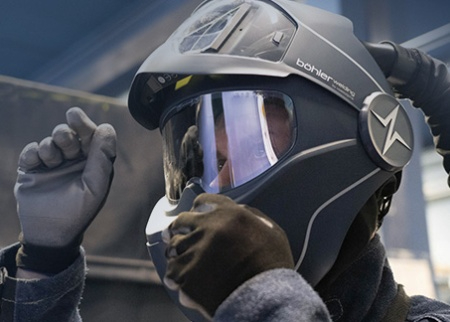
Respiratory protective equipment is needed in situations where hazardous fumes or gases are generated and cannot be adequately reduced by other measures.
Respiratory protective equipment must be selected carefully based on a risk assessment. It must provide sufficient protection and be suitable for the worker, the task, and the working environment.
Tarkempaa tietoa suojavarusteiden valinnasta, määräyksistä ja standardeista saat työterveyslaitoksen sivuilta:
voestalpine Böhler Welding
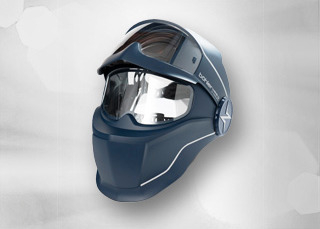
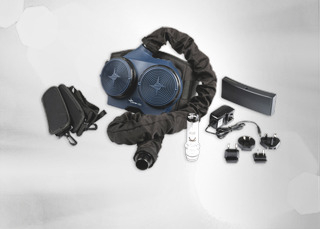
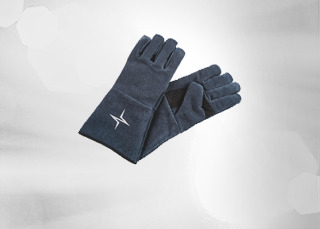
voestalpine Böhler Welding has developed a range of personal protective equipment that includes welding helmets and grinding visors, respiratory protection systems, welding gloves, welding clothing, and safety glasses. These products meet high quality standards and provide welders with the protection they need without compromising comfort at work.
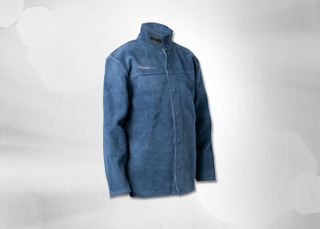
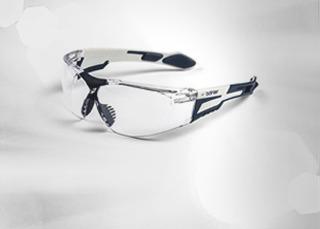
More information about welding protective equipment
More detailed information, especially on regulations and standards, is available on the Finnish Institute of Occupational Health website.
We are also happy to help you choose the right protective equipment and answer any questions related to welding safety, consumables, or equipment. So if you have any questions about welding protective equipment or would like a quote, please contact us using the form below.